Free UK Delivery on All Orders | 2-Year Warranty

40 Psi Diaphragm Pump Explained: A UK Buyer's Guide

40 Psi Diaphragm Pump Explained: A UK Buyer's Guide
By Chloe E.2026-07-2311 min read

Relying on a weak trickle of water from a tap while touring the Scottish Highlands or navigating the Norfolk Broads is a fast way to ruin an off-grid trip. When you step into your caravan or boat shower, you expect a steady, powerful spray that mimics the mains water pressure back home. Achieving this requires the right hardware at the heart of your plumbing system.

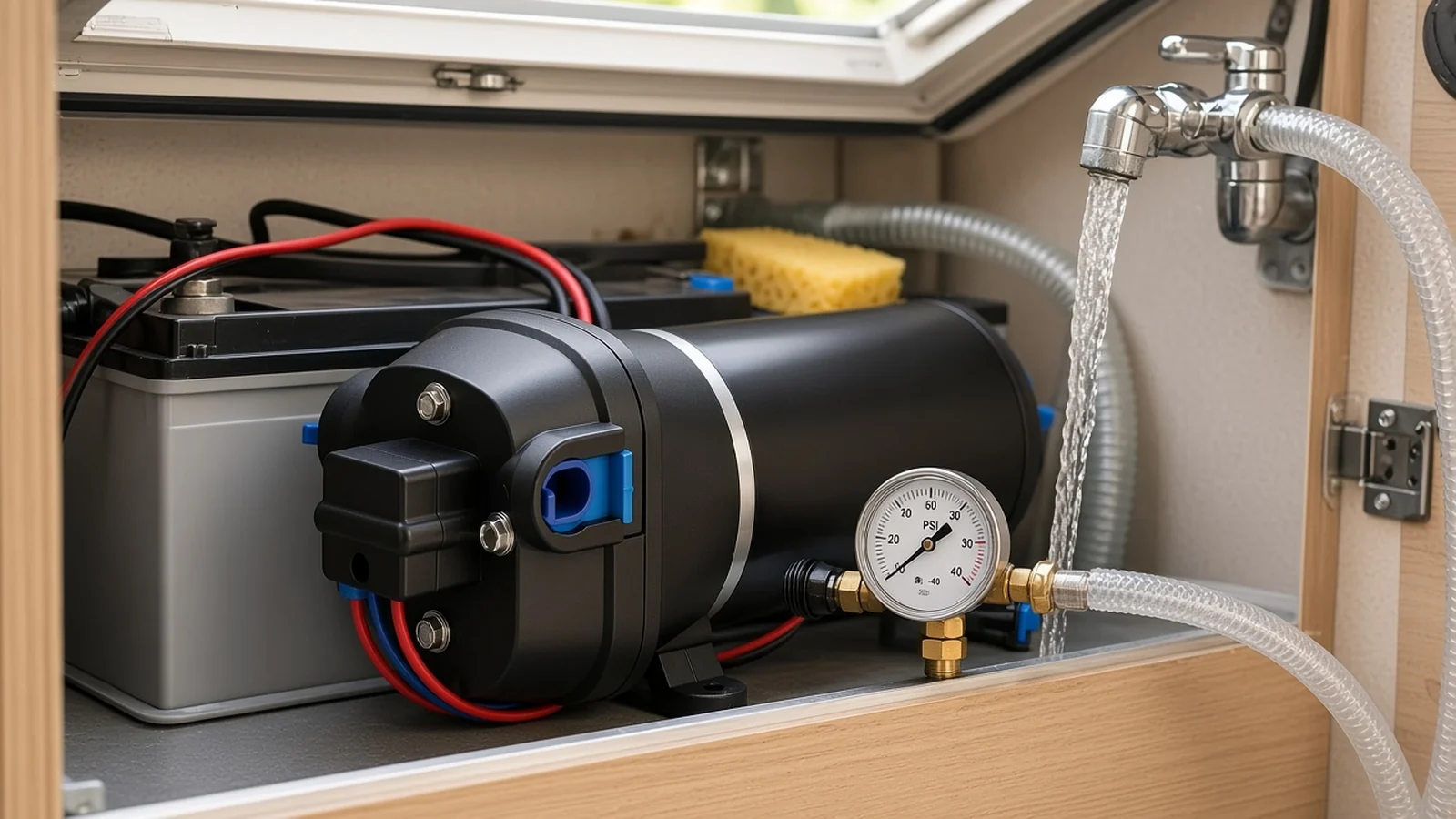
The 40 psi diaphragm pump has emerged as the gold standard for UK off-grid water systems. It strikes the perfect balance between delivering robust pressure and protecting the delicate push-fit pipework found in most British leisure vehicles.

This guide breaks down exactly how these pumps operate, why 40 PSI is the optimal pressure rating, and how to select the right unit for your specific setup.

Key Takeaways

  • Optimal Pressure: 40 PSI (approximately 2.7 bar) safely replicates domestic mains water pressure without stressing standard 12mm caravan plumbing.
  • High Flow Synergy: Pairing 40 PSI with a 17L/min flow rate allows multiple taps to run simultaneously without pressure drops.
  • Self-Priming: Diaphragm pumps can pull water from a tank located several metres away or below the pump itself.
  • Winter Resilience: Proper winterising is essential in the UK to prevent frost damage to the internal rubber diaphragms.

Understanding the 40 PSI Diaphragm Pump

A diaphragm pump moves water by using a motor to flex a flexible rubber membrane (the diaphragm) up and down inside a chamber. As the diaphragm pulls back, it creates a vacuum that draws water in through an inlet valve. As it pushes forward, it forces the water out through an outlet valve.

The "40 PSI" rating indicates the maximum pressure the pump will reach before its internal pressure switch cuts the power to the motor. PSI stands for pounds per square inch. In metric terms, 40 PSI equates to roughly 2.7 bar. To put this in perspective, the legal minimum mains water pressure supplied by UK water companies is 1 bar (14.5 PSI), though most homes operate between 2 and 3 bar.

By installing a 40 psi diaphragm pump, you are effectively replicating standard British domestic water presn your 12V off-grid setup.

Why Not Higher or Lower Pressure?

Pumps rated at 20 or 30 PSI often struggle to push water through modern instantaneous water heaters, resulting in lukewarm showers and spluttering taps. Conversely, pumps rated at 60 PSI or higher pose a significant risk to standard leisure vehicle plumbing. Most caravans and motorhomes built for the UK market use 12mm semi-rigid piping and John Guest push-fit connectors. Sustained pressure above 45 PSI can cause these fittings to weep or blow off entirely.

A 40 PSI rating sits right in the sweet spot. It provides enough force for a brilliant shower and rapid tank filling, while remaining comfortably within the safe working limits of standard off-grid plumbing.

Where a 40 PSI Pump Excels

The versatility of a 12V diaphragm pump makes it suitable for a wide array of applications across the UK.

Caravans and Motorhomes

For touring enthusiasts, water press a primary comfort factor. Older caravans often relied on cheap submersible pumps dropped directly into an Aquaroll. These units rarely produce more than 15 PSI. Upgrading to an inline diaphragm system transforms the habitation experience.

If you are planning a full system upgrade for your touring vehicle, reading our Ultimate Guide to Caravan Water Pressure Pump in the UK will help you map out the necessary pipework and electrical requirements.

Marine Applications

The marine environment presents unique challenges. According to the Canal & River Trust, over 35,000 boats are licensed on their waterways, with the vast majority serving as part-time or permanent floating homes. Narrowboats require pumps that can draw water from large stainless steel or plastic tanks often located deep in the bow, pushing it through long pipe runs to the galley and stern bathroom.

A 40 psi diaphragm pump handles these long horizontal pulls effortlessly due to its self-priming nature. For a deeper dive into marine-specific plumbing, consult our Boat Freshwater Pump Explained: A UK Buyer's Guide.

Off-Grid Gardens and Allotments

British gardeners increasingly rely on rainwater harvesting to combat summer hosepipe bans. A 12V 40 psi diaphragm pump, powered by a small solar panel and leisure battery, can draw water from an IBC tote and push it through a garden hose or drip irrigation system with enough force to run a standard oscillating sprinkler.

The Crucial Link: Flow Rate and Pressure

Press only half the equation. The other vital metric is the flow rate, measured in litres per minute (L/min or LPM). Pressure dictates how hard the water pushes against the pipes, while flow rate dictates the volume of water delivered.

You could have a pump capable of 40 PSI, but if it only delivers 4 L/min, the pressure will instantly drop to a trickle the moment you open a tap. To maintain that 40 PSI under load, you need a high flow rate.

This is where the 17L/min specification becomes paramount. Delivering 17 litres per minute ensures that you can run a shower in the bathroom while someone else washes dishes in the galley sink, without either person experiencing a frustrating drop in performance.

Understanding the interplay between these two metrics is critical for larger setups. We detail this relationship further in our 17 Lpm Water Pump Explained: A UK Buyer's Guide.

Key Features of a High-Quality 40 PSI Diaphragm Pump

Not all pumps are manufactured to the same standards. When sourcing a unit for the UK market, specific features dictate the pump's longevity and performance.

Self-Priming Capability

Unlike centrifugal pumps, which must be flooded with water to operate, a diaphragm pump can pull air out of the inlet pipe to draw water up from a tank. A premium 40 psi diaphragm pump should be capable of self-priming from a dry start up to a vertical lift of at least 1.8 to 2 metres.

Run-Dry Protection

Running out of water is a common occurrence off-grid. If a standard pump runs dry, the friction quickly burns out the motor or melts the internal seals. Quality diaphragm pumps are constructed with thermal overload protection and robust materials (like Santoprene diaphragms and EPDM valves) that allow them to run dry for extended periods without sustaining damage.

Quiet Operation and Acoustic Mounting

A common complaint regarding 12V pumps is the noise. Because they operate via an oscillating cam, they vibrate. If bolted directly to a thin plywood caravan bulkhead, that vibration acts like a drum, echoing through the vehicle.

Look for pumps equipped with heavy-duty rubber mounting feet. These isolate the vibration. Installing flexible braided hose for the first metre of plumbing on both the inlet and outlet sides will further dampen mechanical noise.

UKCA and CE Compliance

Electrical safety is non-negotiable. Ensure the pump carries the UKCA (UK Conformity Assessed) mark, which replaced the CE mark for goods sold in Great Britain. If the pump is supplying drinking water, check that the internal plastics and rubbers are food-grade and ideally align with WRAS (Water Regulations Approval Scheme) material standards.

Installation Best Practices

Proper installation drastically extends the life of a 40 psi diaphragm pump. Rushing the setup often leads to pulsing issues or premature failure.

Use an Inline Strainer

Debris is the enemy of the diaphragm. A tiny shard of plastic from a newly drilled water tank or a piece of grit can lodge in the pump's internal valves, holding them open. This prevents the pump from building pressure and causes it to cycle on and off constantly. Always install a fine mesh inline strainer on the inlet side of the pump. Check and clean this filter monthly during the touring season.

Integrate an Accumulator Tank

When you open a tap slightly, the pump tries to push 17L/min into the pipe, but the tap is only letting 3L/min out. The pressure rapidly hits 40 PSI, the pump shuts off, the pressure drops instantly, and the pump turns back on. This rapid on/off cycling is called pulsing.

Adding a pressurised accumulator tank smooths out the water flow. The tank acts as a buffer, storing a small volume of water under pressure. This reduces pump cycling, prolongs the life of the pressure switch, and ensures a perfectly smooth flow at the tap.

Winterising for the British Climate

The UK winter takes a heavy toll on off-grid plumbing. If water is left inside the pump's chambers during a hard frost, it expands as it freezes, splitting the rubber diaphragms or cracking the plastic pump head.

To winterise your system:

  1. Drain the main fresh water tank completely.
  2. Open all taps (both hot and cold) inside the vehicle or boat.
  3. Turn the pump on and let it run dry for 30 to 45 seconds to push out residual water.
  4. Disconnect the inlet and outlet pipes from the pump.
  5. Leave all taps in the open position until spring.

Troubleshooting Common Pump Issues

Even the most reliable systems occasionally require maintenance. Here is how to address the most frequent issues encountered with a 40 psi diaphragm pump.

Pump Runs But Won't Prime

If the motor is spinning but no water is coming through, you likely have an air leak on the inlet side. The pump is sucking air from a loose fitting rather than pulling water from the tank. Check all jubilee clips and push-fit connections between the tank and the pump. Ensure the inline strainer bowl is screwed on tightly and its O-ring is seated correctly.

Pump Cycles On and Off When Taps Are Closed

If you hear the pump briefly whir into life every few minutes when no water is being used, you have a pressure leak. The pump is losing its 40 PSI pressure, triggering the switch to rebuild it.

First, check every visible pipe joint and tap for drips. If the plumbing is entirely watertight, the issue is likely internal. Debris in the pump head might be allowing water to bleed back through the valves into the fresh tank. Removing the pump head and flushing the valves with clean water usually resolves this.

Upgrade Your Off-Grid Water System Today

Never settle for a weak shower or a spluttering tap again. The Reliable 12V Diaphragm Water Pump for Off-Grid Pressure from DC Autom is engineered specifically for demanding environments.

Delivering 17L/min at 40 PSI, it provides the quiet, self-priming solution your caravan, boat, or garden irrigation system needs. Built with robust materials to withstand run-dry conditions and mounted on vibration-dampening feet, it is the ultimate upgrade for your plumbing.

Shop the DC Autom 40 PSI Pump Now

Frequently Asked Questions

Can a 40 psi diaphragm pump run dry without damage?

Yes, high-quality diaphragm pumps are designed to run dry without sustaining immediate damage. Unlike centrifugal pumps that rely on water for cooling and lubrication, the flexible diaphragms and valves can operate dry. However, leaving it running dry for hours will eventually wear down the motor bearings and drain your leisure battery.

Will 40 PSI damage my older caravan plumbing?

Standard 12mm push-fit plumbing found in UK caravans is generally rated to handle up to 60 PSI (roughly 4 bar) at ambient temperatures. A 40 PSI pump provides a comfortable safety margin. However, if your caravan is over 20 years old and uses degraded flexible hoses rather than semi-rigid pipe, you should inspect all jubilee clips and joints for perishing before upgrading your pump.

Do I need an accumulator tank with a 40 psi diaphragm pump?

While not strictly mandatory, an accumulator tank is highly recommended. It prevents the pump from rapidly cycling on and off (pulsing) when you only open a tap slightly. This reduces wear on the pump's internal pressure switch, quiets the overall system, and provides a much smoother flow of water.

How much power does a 12V 40 PSI pump consume?

Power consumption varies based on the load. At open flow, a 17L/min 40 PSI pump might draw around 6 to 8 amps. When pushing against high pressure (just before shutting off), the draw can peak around 15 amps. Ensure your 12V wiring is correctly sized (typically 2.5mm² or thicker) and fitted with an appropriate inline fuse to handle this current.

Ready to upgrade your pressure with DC Autom?

Shop Now — £63.32

DC Autom

DC Autom provides reliable, high-performance 12V water pumps designed for the practical UK user. Whether you're upgrading your caravan's water system, washing down a boat, or setting up off-grid garden irrigation, our self-priming pumps deliver quiet, steady pressure when you need it most.

© 2026 DC Autom. All rights reserved.