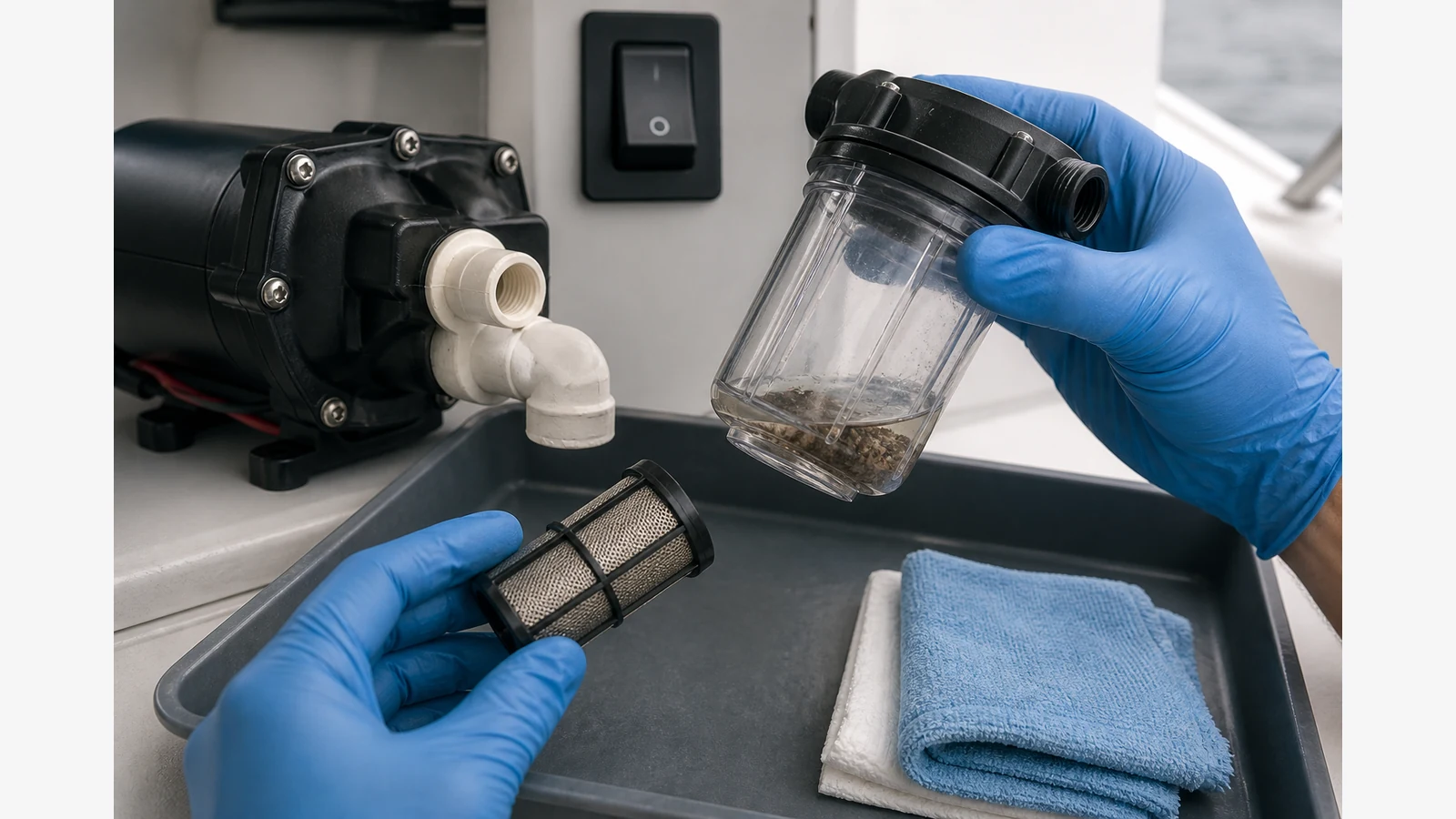
How to Clean a Diaphragm Pump Inlet Strainer Without Flooding the Locker
To clean a diaphragm pump inlet strainer without flooding the locker, isolate 12V power and the water supply, put a tray and towels under the work area, then follow the exact instructions for your strainer and vehicle. Regular strainer checks matter: leisure-pump manuals treat inlet strainer maintenance as routine, and Caravan and Motorhome Club freshwater tips likewise advise checking a diaphragm-pump filter regularly.
Not every pump includes the same strainer. Some systems use an upstream clear bowl, others an in-line mesh, and some submersible setups differ again. Do not force a housing that is not designed to open, and stop if seals, threads or wiring look damaged.
Before you open anything
- Switch the pump off and isolate the circuit.
- Close isolation valves or empty/contain the inlet hose so residual water is limited.
- Place a clean tray and absorbent cloths under the strainer.
- Photograph hose orientation if markings are unclear.
- Have any manufacturer-specified replacement seal ready — avoid improvised sealant fixes.
Cleaning checklist
- Confirm the component is an accessible, serviceable inlet strainer on the suction side.
- Open the strainer only as the part instructions describe (bowl, cap or cartridge).
- Empty debris into the tray; rinse the mesh with clean water.
- Do not jab the mesh with screwdrivers or use solvents that the maker has not approved.
- Inspect the sealing face and O-ring; replace if nicked or flattened when the maker supplies a spare.
- Refit squarely, restore hose clips or locks, reopen water, restore power and prime per the vehicle method.
- Watch for air hissing, drips and short cycling during a supervised run.
Aftercare and logging
Note the date, what debris you found, and whether flow improved. Manufacturer troubleshooting links low flow, no prime and cycling to strainer and restriction issues, so a clean strainer is often step one before deeper diagnosis. If symptoms continue, move to the no-flow or cycling guides rather than repeatedly running a starved pump.
If the strainer body is cracked, or the pump still fails after a clean system, diagnose fully before shopping for a replacement unit: SURGEFLO FL-44 24V DC pump details.
Stop and call a specialist when
- The housing will not open by the documented method
- Threads strip, the bowl cracks, or the seal will not seat
- Wiring is integral to a sealed assembly you would have to cut
- Contamination looks chemical or oily rather than ordinary sediment
FAQ
How often should I clean the strainer?
Follow your vehicle and pump makers’ intervals, and inspect sooner after dusty sites, tank work or visible debris in the container.
Can I run without a strainer if I lost the mesh?
Do not bypass filtration the manufacturer relies on. Debris can damage valves and diaphragms.
Why is there still low flow after cleaning?
Air leaks, kinked hose, closed valves, low voltage or a failing pump remain possible — cleaning is necessary but not always sufficient.