Water Pump Runs But No Water: What to Check
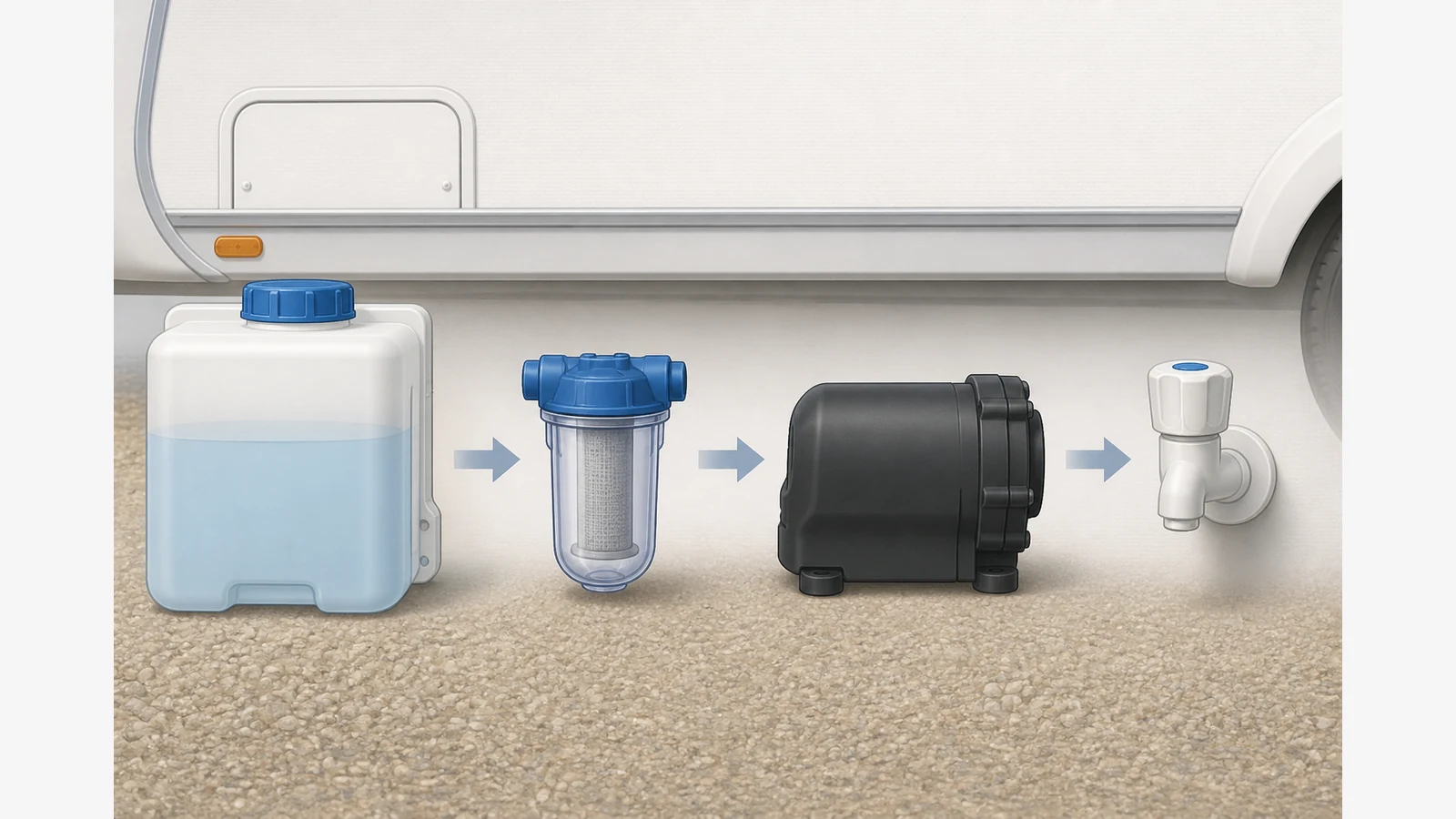
If a 12V water pump motor is running but no water reaches the tap, switch the pump off before prolonged dry running. Treat the fault as a system diagnosis: confirm supply first, then accessible plumbing and air, then electrical checks only within your competence. Generic diaphragm-pump troubleshooting maps “no prime / no flow” to tank supply, strainer, restrictions, air leaks, valves and voltage — not to guesswork on an unknown pump head.
Stop and isolate power if the pump is hot, smelling of burning, making grinding noises, or has been running against an empty supply. Do not dismantle the pump head or adjust a pressure switch unless your exact vehicle and pump manuals say so.
Work the ladder in this order
- Supply: tank or container level, isolation valves open, recent drain or refill completed.
- Inlet path: kinked hose, blocked strainer/filter, loose inlet fittings that can draw air.
- Air in the system: bleed using the caravan’s set-up method rather than forcing the pump continuously.
- Delivery path: closed valves, heater bypass settings, obvious outlet restrictions.
- Electrical only if competent: secure connectors and healthy supply voltage without bypassing fuses.
1. Confirm water is actually available
Check the fresh-water tank or Aquaroll-style container is filled and that any isolation valves between the container and the pump are open. After storage or a drain-down, systems often need deliberate priming and air-lock clearing during set-up; the Caravan and Motorhome Club notes that air locks should be eliminated when bringing a freshwater system back into use, and that the pump should be switched off when you leave the van unattended.
Also confirm you have not left a winterisation drain open, and that you are not asking the pump to pull from an empty side of a dual-tank arrangement.
2. Inspect the accessible inlet hose, strainer and fittings
Manufacturer troubleshooting for leisure diaphragm pumps commonly lists a blocked inlet strainer, collapsed or restricted suction hose, and air leaks on the inlet side as causes of no prime or sputtering. With power isolated:
- Look for kinks, crushed hose sections and disconnected push-fit joints.
- If your system has a serviceable inlet strainer, inspect it for debris (see our strainer cleaning guide).
- Feel for dampness at inlet joints that may indicate a poor seal allowing air ingress.
Do not scrape mesh with sharp tools or invent replacement parts. If the strainer bowl, seal or housing is cracked, stop and replace the component per the part maker’s instructions.
3. Bleed trapped air the vehicle way
Spluttering taps after a refill often mean air, not a failed motor. Follow the caravan handbook for priming: typically opening taps in a sensible order, keeping the inlet submerged and sealed, and giving the system short, supervised run periods rather than continuous dry operation. Club freshwater guidance emphasises clearing air locks during set-up and checking a diaphragm-pump filter regularly as part of normal care.
4. Electrical checks — only what you can do safely
Low or unstable voltage can mimic a weak or no-flow pump, but low flow alone does not prove an electrical fault. If you are competent with 12V leisure systems, confirm connectors are clean and secure and that protection devices have not opened. The Caravan and Motorhome Club warns that a leisure battery can supply enough current to overheat wiring, so never bypass a fuse to “keep the pump going”. If you smell heat, see damaged cable, or are unsure, isolate power and book a qualified caravan electrician.
For repeated fuse failure, use the dedicated fuse-fault checklist rather than upsizing protection.
When to stop guessing and escalate
- No flow after supply, inlet and air checks, with the motor still energised.
- Heat, smoke smell, melted insulation or a pump that will not stop.
- Suspected internal pump damage after dry running.
- Any need to open the pump head, re-set a switch, or rewire a circuit beyond label guidance.
If the pump itself is confirmed failed and you are comparing a like-for-like 24 V DC diaphragm pump for a freshwater system, review the product page only after you have ruled out tank, strainer, air and wiring causes: SURGEFLO FL-44 24V DC pump details.
FAQ
Can I keep the pump running until water appears?
No. Prolonged dry running risks damaging many diaphragm pumps. Use short, supervised attempts while you correct supply and air issues.
Does a spinning motor prove the pump is fine?
No. The motor can run while the inlet is starved of water, full of air, or restricted.
Should I adjust the pressure switch?
Not unless the exact pump and vehicle manuals instruct you to, with the correct procedure. Cycling and no-flow faults are more often leaks, air, strainers or voltage issues.